

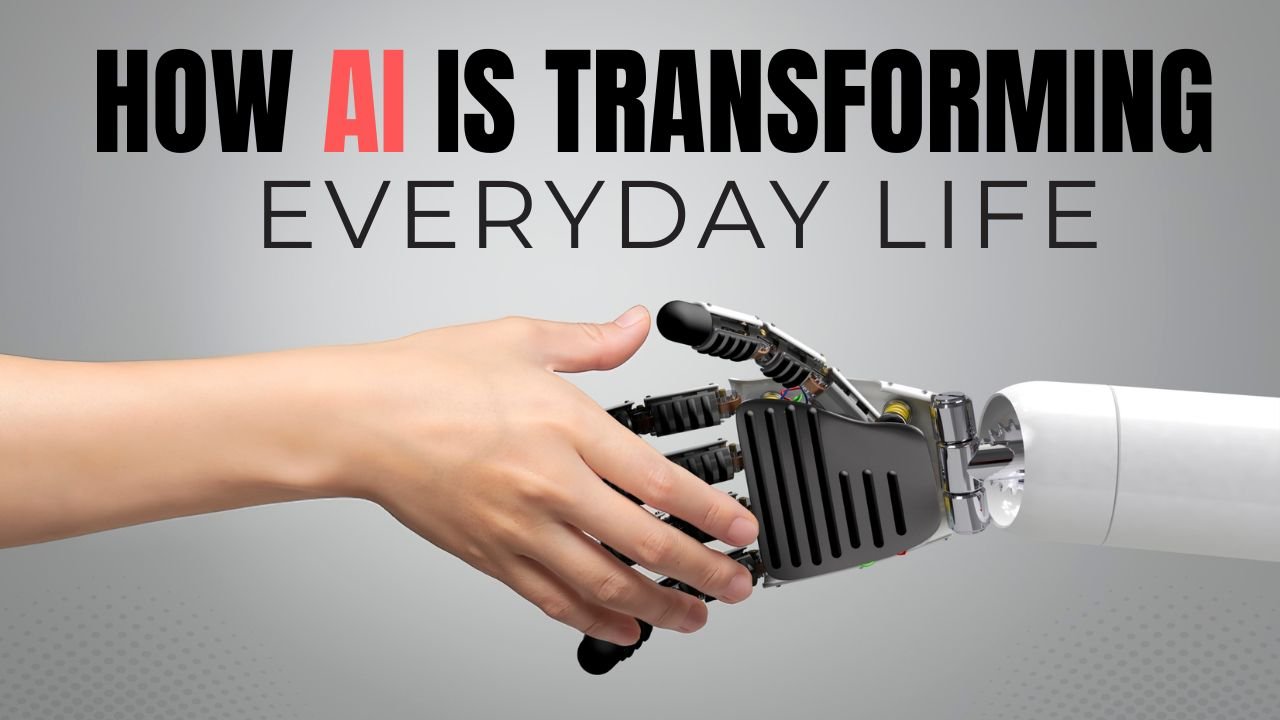

How AI Is Transforming
Artificial Intelligence (AI) is no longer a futuristic technology reserved for scientists or large technology companies. Today, AI has become an essential part of everyday life, influencing how people communicate, learn, work, shop, travel, manage finances, and even take care of their health.
Whether you realize it or not, AI is already helping you every day. From receiving personalized recommendations on YouTube and Netflix to using Google Maps for navigation, AI works silently behind the scenes to make life easier, faster, and smarter.
In 2026, AI has evolved from being a technological advantage into an everyday necessity. Individuals, students, professionals, business owners, healthcare providers, educators, and governments are increasingly adopting AI-powered solutions to improve efficiency and solve complex problems.
This article explores why AI has become important for everyone, how it impacts daily life, and how you can use AI responsibly to improve your future.
What Is Artificial Intelligence (AI)?
Artificial Intelligence refers to computer systems designed to perform tasks that typically require human intelligence. These tasks include understanding language, recognizing images, analyzing data, making decisions, solving problems, and generating content.
Instead of replacing human intelligence, modern AI is designed to assist people by reducing repetitive work and providing intelligent recommendations.
Why AI Is Important for Everyone
Artificial Intelligence is important because it helps people save time, improve productivity, reduce repetitive work, and make better decisions. It allows individuals to complete tasks faster while maintaining higher levels of accuracy.
Today, AI is no longer just a tool for programmers or scientists. Anyone with a smartphone or computer can benefit from AI-powered applications. Students can study more effectively, professionals can complete work faster, businesses can improve customer service, and families can simplify everyday tasks.
Rather than replacing people, AI is designed to support human abilities by automating repetitive work and providing intelligent assistance.
AI in Daily Life
Most people interact with Artificial Intelligence several times every day without realizing it.
When you search on Google, AI helps understand your questions and provides relevant results. Google Maps predicts traffic conditions and suggests the fastest route to your destination. Streaming platforms recommend movies and music based on your interests. Online shopping websites suggest products you may like based on previous purchases.
Even smartphones use AI for facial recognition, camera enhancements, battery optimization, voice typing, spam detection, and language translation.
These everyday applications make life more convenient and efficient.
AI in Education
Education has experienced one of the biggest transformations through AI.
Students can now receive personalized learning experiences based on their strengths and weaknesses.
Teachers also use AI tools to prepare lessons, create quizzes, summarize research, and automate administrative tasks.
AI enables learners to study anytime and anywhere, making education more accessible.
AI in Healthcare
Healthcare professionals use AI to improve patient care, diagnose diseases earlier, and analyze medical records more efficiently.
Patients also benefit from AI-powered health monitoring devices and virtual assistants.
AI supports healthcare professionals rather than replacing them, allowing doctors to focus more on patient care.
AI in Business
Businesses of every size now use AI to improve productivity and customer service.
Small businesses especially benefit because AI reduces operational costs while increasing efficiency.
Companies that embrace AI often make faster decisions and provide better customer experiences.
AI at Home
Artificial Intelligence has also transformed our homes.
Smart speakers can answer questions, play music, and control connected devices using voice commands. Smart security systems detect unusual activity and send alerts to homeowners. Robot vacuum cleaners automatically clean floors, while smart thermostats adjust temperatures to save energy.
These intelligent technologies improve comfort, convenience, and home security.
Benefits of Artificial Intelligence
Artificial Intelligence offers numerous benefits that improve both personal and professional life.
It saves valuable time by automating repetitive tasks and reducing manual effort. AI improves productivity by helping users complete work faster and more efficiently. It provides personalized recommendations for entertainment, shopping, education, and health.
AI also improves accuracy by reducing human errors during data analysis and decision-making. It increases accessibility by assisting people with disabilities through speech recognition, text-to-speech technology, and real-time language translation.
Perhaps most importantly, AI enables individuals and organizations to make smarter decisions using data-driven insights.
Challenges of AI
Although Artificial Intelligence offers many advantages, it also presents several challenges.
Privacy remains an important concern because AI systems often process large amounts of personal information. There are also concerns about misinformation, algorithmic bias, cybersecurity, and the changing nature of employment.
These challenges highlight the importance of developing and using AI responsibly while maintaining transparency, fairness, and strong data protection practices.
How to Use AI Responsibly
o gain the greatest benefits from Artificial Intelligence, users should apply critical thinking and responsible practices.
Always verify important information generated by AI before relying on it. Protect personal and sensitive information when using AI tools online. Continue learning about AI as the technology evolves, and choose trusted platforms that prioritize security and privacy.
Remember that AI is designed to assist human decision-making, not replace human judgment.
The Future of Artificial Intelligence
The future of Artificial Intelligence is incredibly promising.
AI will continue to improve healthcare, education, transportation, scientific research, agriculture, finance, and environmental sustainability. Future AI systems will become more personalized, helping individuals manage daily activities more efficiently while supporting innovation across every industry.
As AI becomes more integrated into society, learning AI skills will become increasingly valuable for students, professionals, and businesses.
FAQs:
Artificial Intelligence is technology that enables computers to perform tasks that normally require human intelligence, such as learning, reasoning, problem-solving, and understanding language.
AI helps people by improving productivity, simplifying daily tasks, providing personalized recommendations, enhancing healthcare, supporting education, and making digital services more efficient.
AI can automate repetitive tasks, but it cannot replace human creativity, emotional intelligence, ethical judgment, and complex decision-making. It works best as a tool that supports human capabilities.
AI is generally safe when used responsibly. Users should choose trusted AI platforms, protect personal information, and verify important information before making decisions.

Leave a Comment